Nusa Blog · Body & Science
Nusa Blog · Body & Science
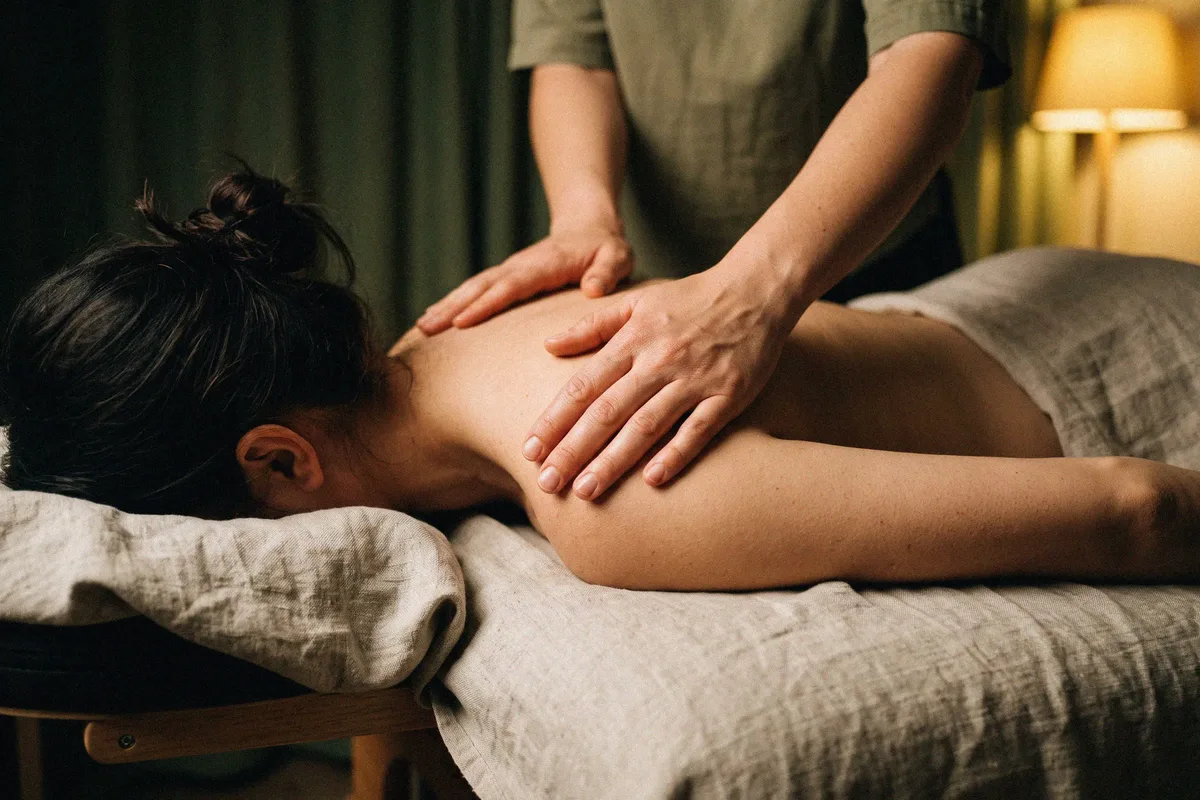
You have a set of nerve fibres that exist for almost nothing else. We’ll get to those.
Somewhere on the internet is a number claiming massage lowers your cortisol by 31%. It is on spa websites, in brochures, in a hundred wellness articles. As far as the best evidence goes, it is not true.
We think the real story is better. So here is what the research actually says about walking into a massage after a day at a desk, including the parts that are less flattering to us.
The cortisol claim came from research that looked genuinely promising in the early 2000s. Then in 2011 a comprehensive quantitative review tested it properly, with stricter methods and a focus on higher-quality trials. The conclusion: massage’s effect on cortisol is very small, and in most cases not statistically distinguishable from zero. An earlier meta-analysis of 37 studies had already found single sessions did not move it.
So no, we are probably not draining your stress hormone. Something else is happening. And it works.
That same analysis found a single massage reliably lowered three things: state anxiety (the anxious feeling you have right now, as opposed to your general disposition), blood pressure, and heart rate.
Which describes fairly well what most people want at 19:00 on a Tuesday. Not a biochemical cleanse. Just a nervous system that stops behaving as though something urgent is about to happen.
Here is the surprising part.
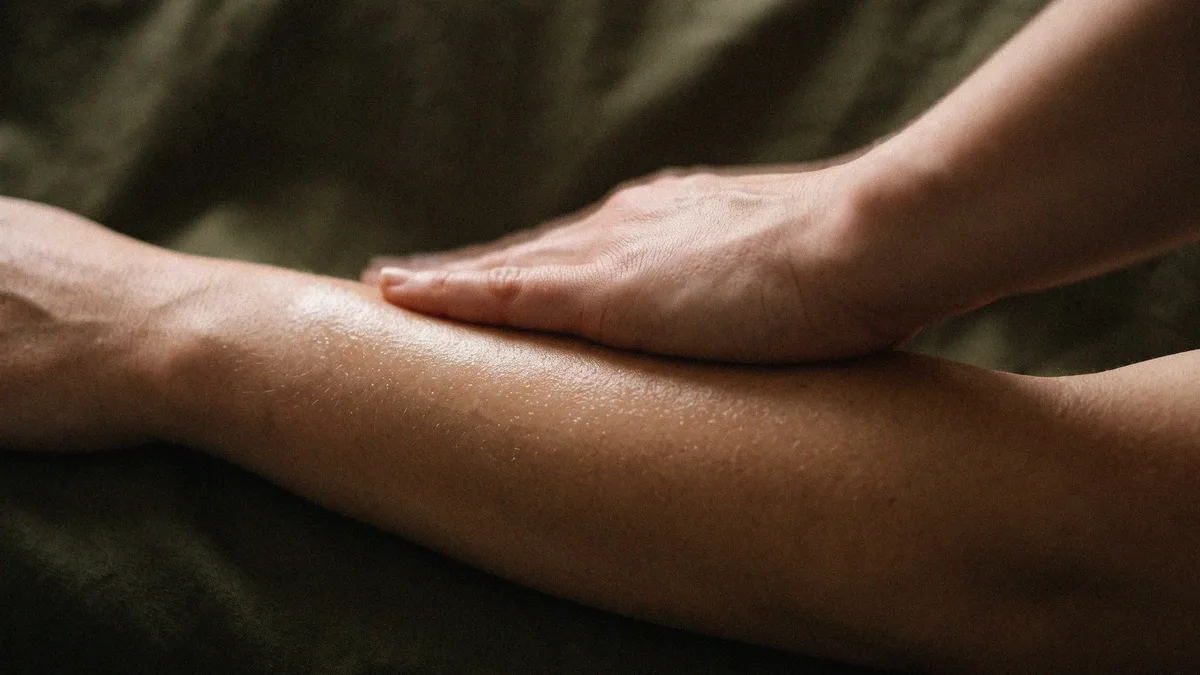
Human skin carries a class of nerve fibre called C-tactile afferents. They are odd. They do not tell your brain what you are touching, or where, or how hard. Other fibres handle that. CT fibres seem to have one job: to report that touch feels good.
And they are tuned. They fire hardest for slow, gentle stroking, at roughly three centimetres per second, at about skin temperature. Faster, and the response drops away. How fast they fire tracks how pleasant people say the touch feels, and the signal arrives in the posterior insula, a region tied to emotion and bodily feeling rather than plain sensation.
Read that speed again. Three centimetres per second, warm, unhurried. That is not a description of a nerve. That is a job description for a massage therapist.
Workplace chair-massage studies are smaller and messier than we would like, so treat them as suggestive rather than settled.
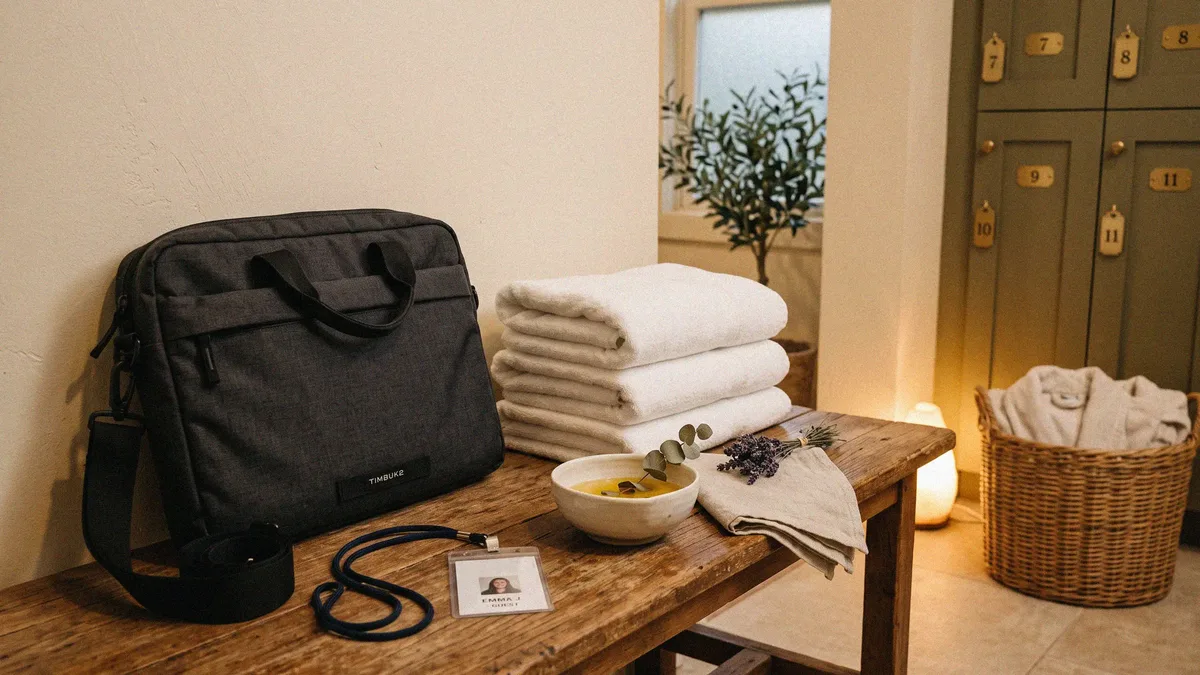
Still: a randomised trial of 124 office workers given 15-minute chair massages twice a week for four weeks found a significant rise in pain threshold across every neck muscle tested, plus better self-reported relaxation. Other workplace studies report improved alertness.
If you spend your day between Saldanha and Avenidas Novas with your shoulders somewhere near your ears, the neck finding is the one that matters. It is also why our lunch break massage runs to 40 minutes, built to fit inside a break.
This is the most useful finding, and the least convenient.
In that meta-analysis, the largest effects did not come from single sessions at all. They came from a course of treatment, and they appeared in trait anxiety and depression: the baseline, not the moment. The authors put the magnitude on a par with psychotherapy.
Which is a polite way of saying one massage helps you sleep tonight, and a habit is a different thing entirely.
One massage changes your evening. A habit changes the baseline.
While we are being honest.
Massage does not flush lactic acid from your muscles. Lactate clears on its own within about an hour. A study that tested this directly found massage did not speed removal, that light activity worked better, and that sitting quietly did just as well. In that same study, massage actually slowed it slightly.
The myth traces to a misreading of 1920s physiology. It has outlived its evidence by a century.
Your liver, kidneys and lungs handle detoxification. They are very good at it. They do not need our help, and any spa that says otherwise is selling you something.
It is an hour in which your heart rate falls, your blood pressure falls, the anxious edge comes off, and a nerve system that evolved for precisely this finally gets some work. Make it a habit, and the evidence says the baseline moves too.
For shoulders and necks built by a keyboard, deep tissue is the obvious choice. To switch off completely, the relaxing massage. And if you work for yourself or remotely, we have a whole page on massage for digital nomads.
That seems like plenty. We never needed the 31%.
General information, not medical advice. If you have a health condition, speak to your doctor before booking and tell your therapist.
Explore More
 Visitor Guide
Practical ways to get your legs, feet and energy back after a day exploring the city.
 Lisbon Stories
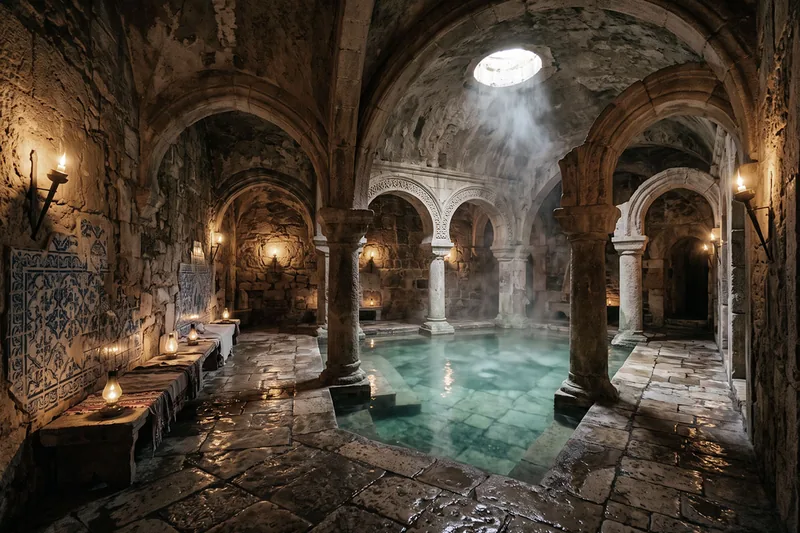
Alfama comes from the Arabic for "the baths". Two thousand years of quiet in one neighbourhood.
 Lunch Break
Forty minutes that fit inside a break, steps from Saldanha and Avenidas Novas.
Book your massage at the spa in Saldanha, or ask for our service at your hotel in Lisbon.
Message us on WhatsApp